
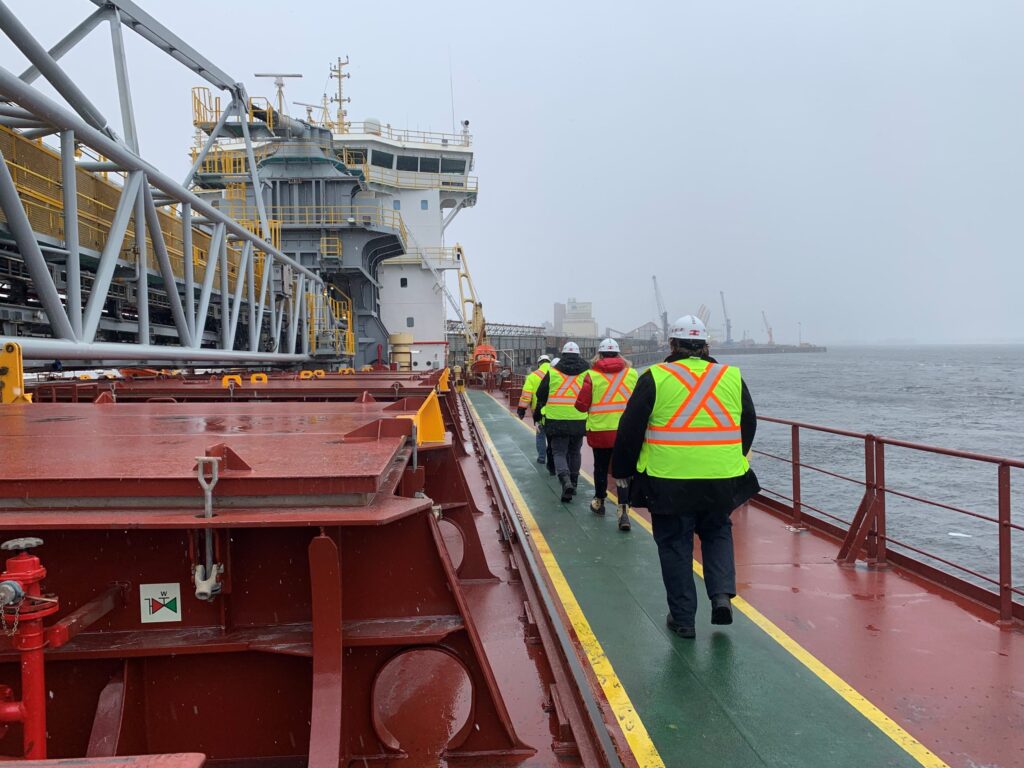
Capt. Valentin Mavrinac, Director of Shipping Studies and Senior Lecturer at CIM-Cyprus Business School, and Senior Research Fellow at the Cyprus Centre for Business Research, discusses the important topic of Safety Campaigns in Shipping. Read on and let us know what you think.
Safety campaigns are an important part of an organisation’s commitment to protecting people, property, and the environment. While procedures, permits, and equipment provide essential safeguards, many incidents continue to be linked to human errors – such as complacency, poor communication, inadequate risk assessment, loss of situational awareness, and procedural deviation. Safety campaigns help address these challenges by keeping critical risks visible, reinforcing lessons learned, and encouraging safe decision-making during day-to-day operations.
Common safety campaigns across the maritime industry are focusing on areas such as Human Element, Contained Spill Prevention, Life-Saving Appliances, Fire Safety, Fatality Prevention, Navigation Safety and Health and Wellbeing. These initiatives are most frequently developed using information gathered from incidents, near misses, audits, inspections, observations, and industry trends. By highlighting specific risks and expected controls, campaigns help crews focus attention on hazards before an accident occurs.
The real value of a safety campaign is not measured by the number of posters displayed or toolbox talks delivered. Its success is measured by safer behaviours onboard and by a real reduction in accidents. A campaign is effective when a crew member identifies a hazard before starting a job, stops an unsafe act, rectifies an unsafe condition, submits a near-miss report, or intervenes using STOP Work Authority. These actions prevent accidents and protect colleagues. Research also shows that well-designed safety campaigns contribute to stronger safety culture, improved communication, enhanced compliance, and better operational performance.
Safety campaigns support the transition from reactive safety to proactive safety and even predictive safety management. Instead of waiting for an accident to occur, the goal is to use leading and hybrid indicators such as near misses, safety observations, STOP Work reports, audit findings, and trend analysis to identify risks earlier and implement targeted interventions. This approach helps prevent accidents before they happen and contributes to safer and more resilient operations.
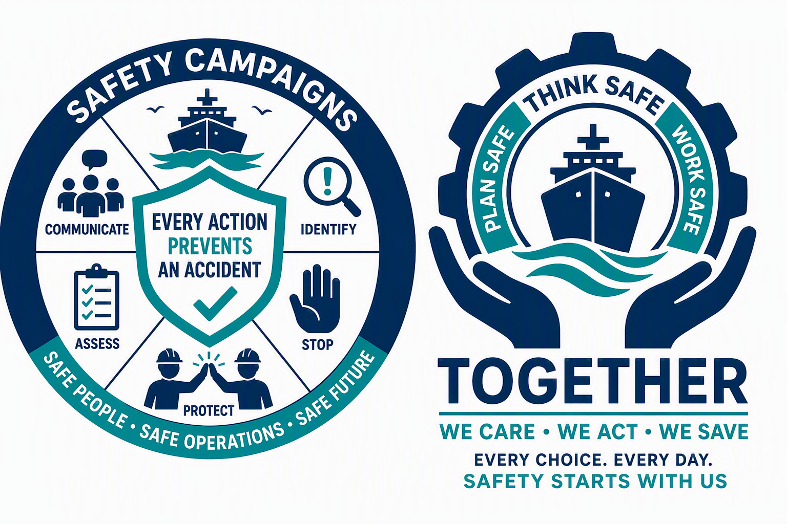
Every crew member plays a vital role in making safety campaigns more effective. The most valuable contribution is active engagement. For those designing safety campaigns, the objective must be crew engagement. It is essential to ensure that crew members are reading campaign materials, participate in discussions, ask questions, challenge unsafe practices, and share practical experiences from onboard operations. When campaign messages are linked to real tasks and real risks, they become far more meaningful than simple awareness exercises.
Crew members can further strengthen campaign effectiveness by:
- Reporting unsafe acts or unsafe conditions utilizing Safety Observation Note.
- Using STOP Work Authority whenever necessary.
- Identifying and recording Best Practices, again utilizing Safety Observation Note.
- Sharing lessons learned from personal experience with their colleagues.
- Providing feedback on campaign topics and content.
- Participating actively in toolbox talks and HSE meeting.
- Helping with hazard identification prior work starts aiming to prevent accidents.
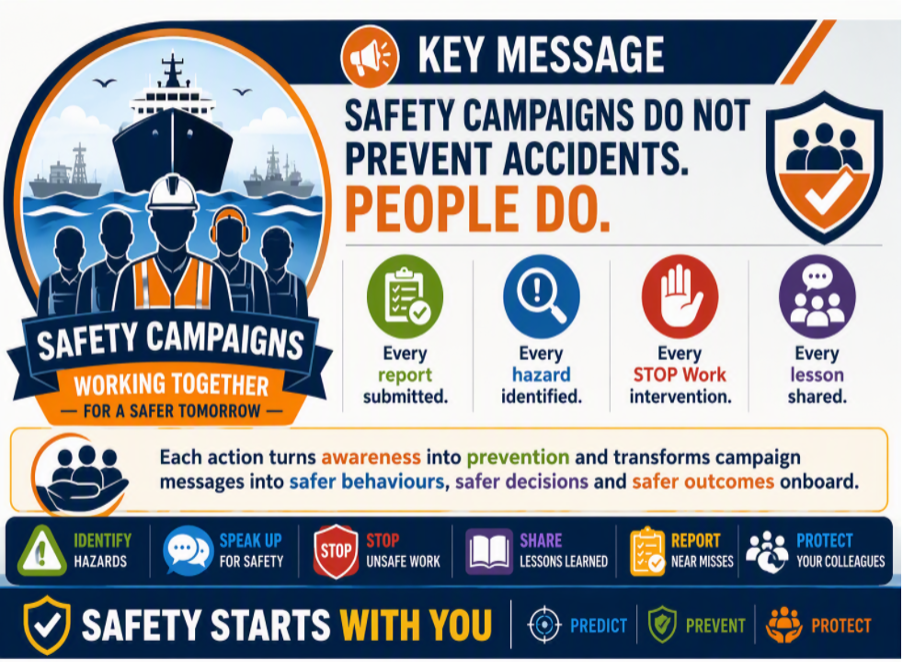
Safety campaigns are most successful when they become part of everyday operations rather than stand-alone events. Through active participation, open communication, and a commitment to continuous improvement, companies can ensure that campaign messages are translated into safer behaviours, stronger safety culture, and fewer incidents across the fleet.